

“The common thread is that property and the arts have a huge impact on how we function in our day to day lives. When done well and together, they inspire us to be better in our own work, to relate to others, to connect communities and to provide space that represents our many different livelihoods.”
Six years at Creative Land Trust (CLT), and Gemma Dean has had a hand in almost every structural decision that’s let us prove art and property can work together. Gemma has taken on the role of Head of Development, during which she has helped secure fit-out finance for our very first property, Wallis Road Studios in Hackney, through Figurative’s Arts and Culture Impact Fund; now operated by studio providers Cell Projects and Mainyard Studios; providing affordable space for around 150 artists and makers. She’s pioneered the conversation around CLT’s impact finance and blended funding to keep artist studios in the city. From there, she went on to develop cultural strategy and policy with developers and local authorities. We’re now seeing the appetite for and adoption of new Section 106 clauses and handover specifications at local authority level, which is encouraging. In West London, she secured a permanent space, Friary Park, due to open in a few months in a bustling creative community; moving it beyond meanwhile use to permanently affordable, central to CLT’s objects and protecting our cultural infrastructure. We ask Gemma about her highlights and key learnings in this interview.
Describe your role at CLT in a sentence?
All the P’s: Property, Place, Policy, Partnership, Production, People
You’ve been at Creative Land Trust for six years. Tell us what makes CLT different and what has kept you excited about your role?
The work of CLT touches on every aspect of property – from the planning stage right through to delivery and operations – while being driven by a shared purpose to protect space for arts, crafts and culture.
It’s a very special and multi-disciplinary role, which stretches far beyond the immediate team out to all the studio providers, planners, developers and funders that we sit between. I love being able to connect and learn from so many varied professions, to deliver more spaces for artists and makers.
Of course, the ultimate highlight is visiting the studios and meeting artists and makers – from painters, sculptors, photographers, jewellery makers, fashion designers and many more, at all stages of their careers, the innovation and dedication never fail to inspire
You’ve represented CLT across different platforms and events. From podcast to stages. Is there a conversation that challenged your own thinking?
The first presentation I gave at International House in Brixton, coming out of Covid lockdown, was to an audience of local community members. Having previously worked in banking, I arrived ready to speak to a property finance audience. I quickly realised that there were very different questions and issues that mattered to this audience, who were on the ground delivering community wealth on a day-to-day basis. It was a great reminder that there isn’t a single right answer, and real change comes through collaboration and bringing different stakeholders and direct experiences together.
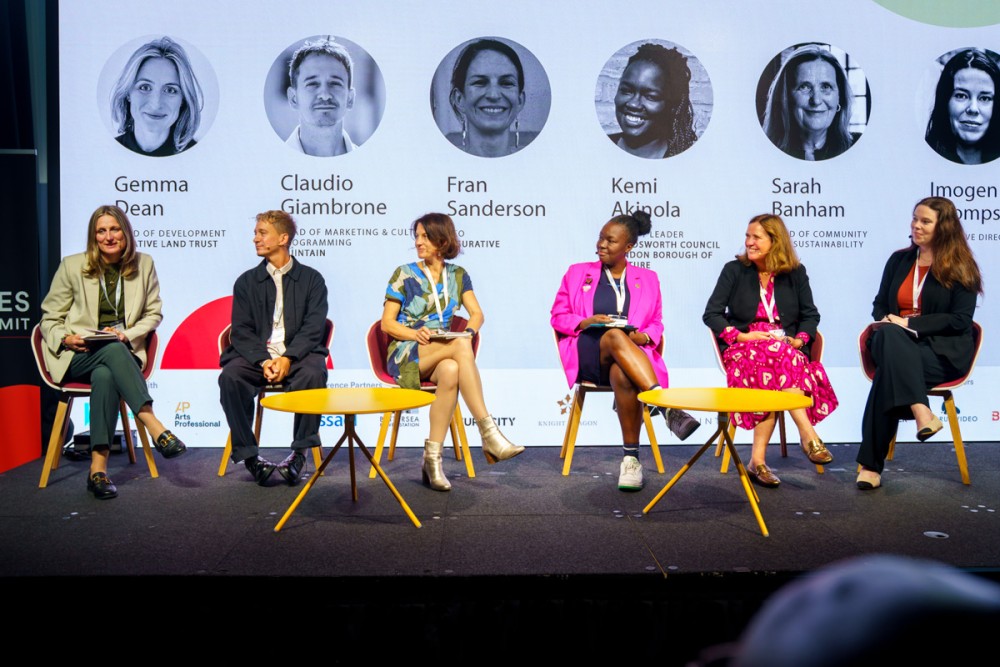
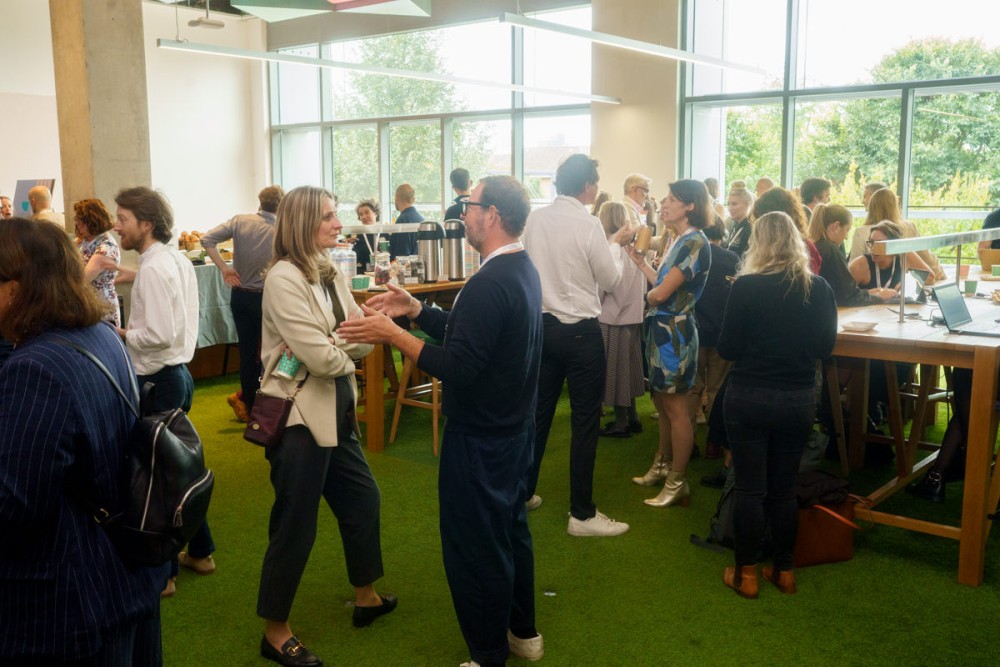
Image Courtesy of Creative Industries Property Summit
Something we’ve discussed is bringing artists into the room, bringing studio providers into the conversation; what does that actually look like in practice, and what changes when it happens?
The most meaningful conversations we have with Developers and Policy leaders, happen when we’re walking around the studios meeting the artists, seeing the work and visiting the studios. One of the biggest similarities between property and culture, is that they are both emotive and tangible, so being there in the space is when it really resonates.
We want to respect the privacy of the artists’ workspaces, so these are selective opportunities. In the future, I would like to see more artists being invited and paid to speak on panels at property events, to emphasise the practical elements of delivering these spaces and why it matters so much economically.
You’ve also worked across policy, a lot of the work at CLT involves systemic change. How has the conversation changed in this short period ? What’s the biggest mindset shift you’ve seen?
The conversation now moves [slightly] more quickly from the ‘why’ to the ‘how’. There is still a lot of pressure for the arts and culture sector to define its contribution to places and communities, and the measures constantly change, which is challenging. However, the policy work that CLT and others active in the arts and culture sector are undertaking, has emphasised practical changes, creating better physical and economic conditions to ensure that affordable space is viable and can be protected in the long term. For example, defining handover conditions for properties as a minimum requirement to satisfy affordable workspace policies.
You seem to seamlessly operate across sectors for one mission: to reduce the decline of long-term artist studios. What has that been like, and what is the one common thread that ties them all together?
I wouldn’t say it’s seamless! There is a lot of challenge and debate when bringing about change, which is necessary when taking such a long-term view.
The common thread is that property and the arts have a huge impact on how we function in our day to day lives. When done well and together, they inspire us to be better in our own work, to relate to others, to connect communities and to provide space that represents our many different livelihoods.

Image Courtesy of National Lottery Heritage Fund, Photographer Andrew Baker
What will you miss about CLT?
The team of course! CLT is truly multi-disciplinary both on the Executive team and Board, and that’s something which I love. I’ll really miss meeting the artists, makers and craftspeople on visits to the studios. It’s an amazing sector, and I’ve enjoyed getting to know the nuts and bolts of how it’s delivered across London and elsewhere. Special thanks to all those studio providers who opened their doors to show me around and visit when I first joined. This is a hugely experienced sector, and I hope I contributed to it by raising visibility, finding a common language and building connections across policy, property and the arts. I’ll always be an advocate for arts and culture being taken seriously in the built environment, and I look forward to continuing to make cross sector connections in future roles. It’s exciting to be able to look at how this is applied in other places and contexts, and CLT is a brilliant case study for others to learn from.