

“Often you have to live with a painting for a long time before you understand it. There’s something instinctive about making art. It comes from a part of your unconscious that you don’t fully understand.”
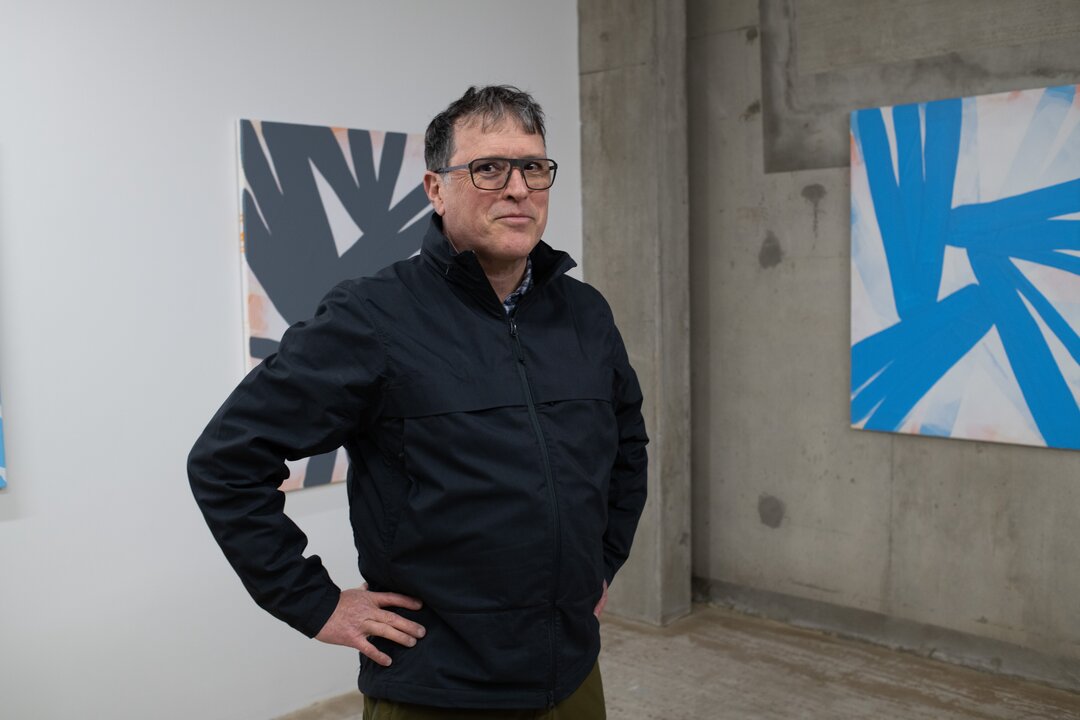
We visited Daniel Jackson in his basement studio at Wallis Road Studios, Cell Studios, a space he chose deliberately for its affordability and stability. Daniel has been rooted in Hackney Wick for fifteen years, first working on the site when it was still a fixtures and fittings factory, and now returning to the same ground in the newly developed building. His practice spans painting and technology – from early computer art and virtual reality in the 1990s, through co-founding the influential art and culture publication Mute Magazine, to the algorithmic, layered paintings filling his studio today. In this conversation, Daniel reflects on why a studio close to home matters, what it means to guide paint rather than direct it, and why he chose a smaller space to stay longer. Read the full interview below.
Creative Land Trust (CLT): Could you introduce yourself and tell us a bit about your practice?
Daniel Jackson (DJ): I’m Daniel Jackson. I’m an artist who, although you’re seeing a lot of paintings in here at the moment, also works extensively with technology. A lot of my practice is based around coding and algorithmic approaches. The work reflects aspects of my thought process and philosophical interests in infinity, logic, illogic and spirituality. That’s the broad overview.
CLT: How long have you been based in this area?
DJ: I’ve been working in this locality for around fifteen years. Originally I had a small studio on this site when it was still the old fixtures and fittings factory. I later moved into a larger space there, and when the building was purchased and redevelopment began, I moved across the road into the warehouse at Wallis Road. I knew this building was coming and hoped I’d eventually be able to move back onto the site, which I did.
CLT: Is this building very different from the warehouse studios?
DJ: Very different. The warehouse was really only workable for six to nine months of the year. It had a very thin roof and no insulation at all. In winter it was basically like being outside. Amazing studios in some ways, but with very real drawbacks.
CLT: How did you come to your practice?
DJ: I trained as an artist at the Slade School of Art. While I was there I became interested in computing as a new artistic medium through connections with people working in the computing department. This was in the early 1990s.
That led to a collaboration with friends from college to produce Mute Magazine, which originally focused on art and technology before expanding into technology, culture and politics.
Later I completed an MA at Middlesex University on a course established by the computer art pioneer Paul Brown. From there I worked in an early virtual reality company in the mid-1990s before eventually setting up my own practice. I’ve been working as an artist ever since.
CLT: You’ve come back to painting in recent years. Why?
DJ: I think people often do come back to painting. Partly it’s about getting older. There’s a desire for something immediate, visceral and responsive. Computing is logical and predetermined in a way that painting isn’t.
I’m exploring similar ideas through different mediums now. They’re parallel practices. Painting allows me to access a different way of thinking.
CLT: Would you say having a studio space is essential to your work? And how are you finding your current studio and the artist community here?
DJ: Absolutely. I still use technology in my practice – I have a pen plotter and other equipment – but over the years I’ve accumulated the tools I need, and having a dedicated space is essential. I’m part of an artist community, although not necessarily only with the people in this building. There are lots of very different artists here, which is great.
What remains important about this area is that there is still a strong artist community. Many artists are being pushed further out to places like Hastings and Leytonstone, but Hackney Wick still retains that creative ecosystem.
I also think it’s really important to have a studio close to where you live and spend your time. I live locally in Clapton, my friends are here, and having a studio that’s disconnected from your everyday life makes things much harder.
DJ: I deliberately chose a smaller studio in the basement because I thought I’d be able to afford it for longer. It’s not cheap, even by affordable studio standards, but my thinking was that a smaller space would give me a better chance of staying here long term.
CLT: How do you feel about the changes in Hackney Wick over the years?
DJ: I think it’s great overall. It’s lost some of the edgy atmosphere it once had, which was exciting in its own way, but it’s also become much more accessible and connected.
Years ago it felt like an island. Getting here was difficult and at night it felt very remote. There was something magical about that – like entering a hidden place that not many people knew about.
Now it’s more developed and sanitised, but there are still pockets of that wildness. I think they’ve also done a good job retaining elements of the area’s industrial heritage, which is reflected in some of the newer architecture too.
CLT: Can you tell us about the work you’re currently making?
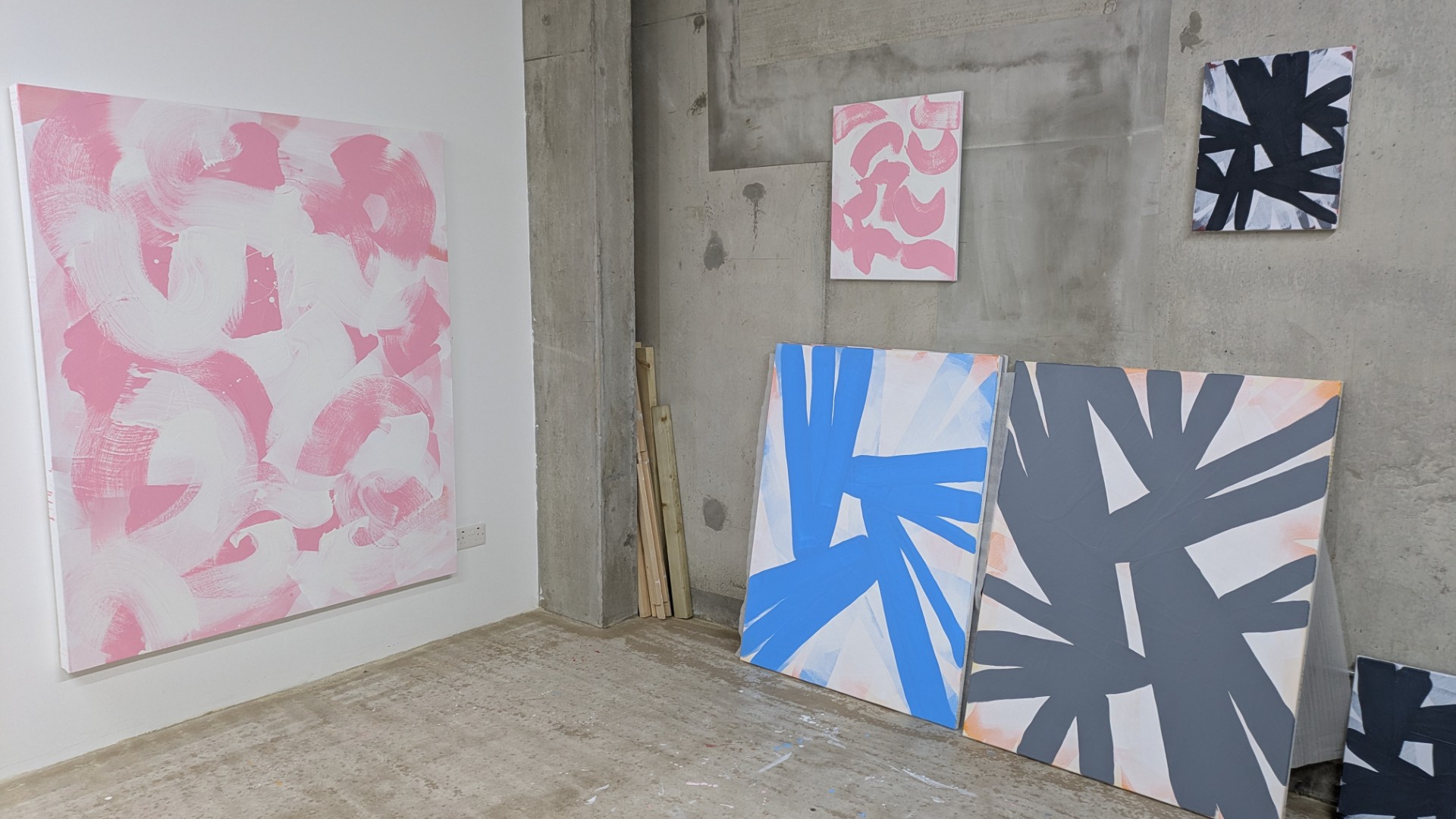
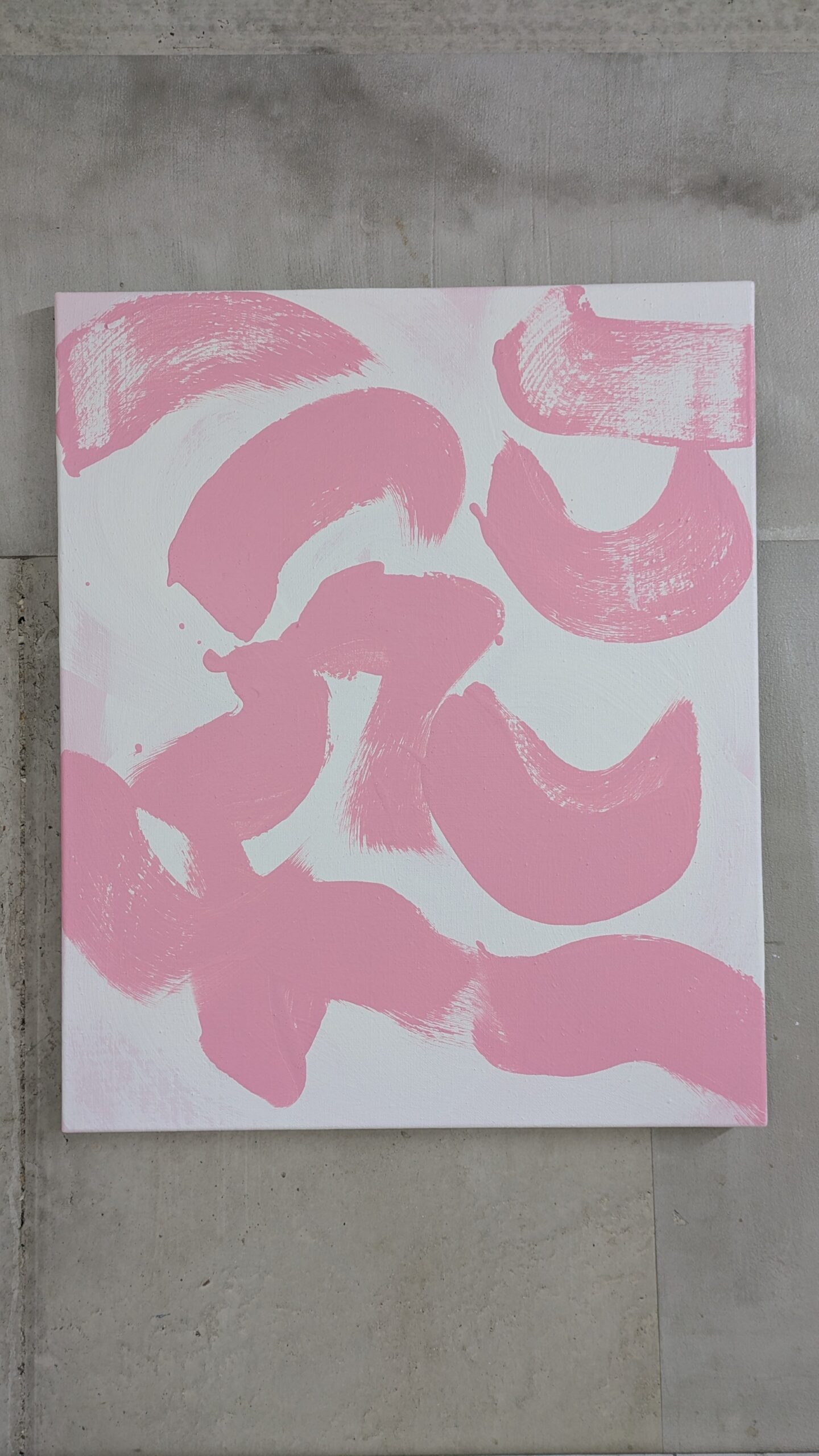
DJ: I’ve recently been working on a series of paintings, including the pink works in the studio. I only decided they were finished last week.
Often you have to live with a painting for a long time before you understand it. There’s something instinctive about making art. It comes from a part of your unconscious that you don’t fully understand, and that’s what makes it exciting. You’re exploring things that you don’t yet know.
One of the dangers is overworking a piece and not knowing when to stop.
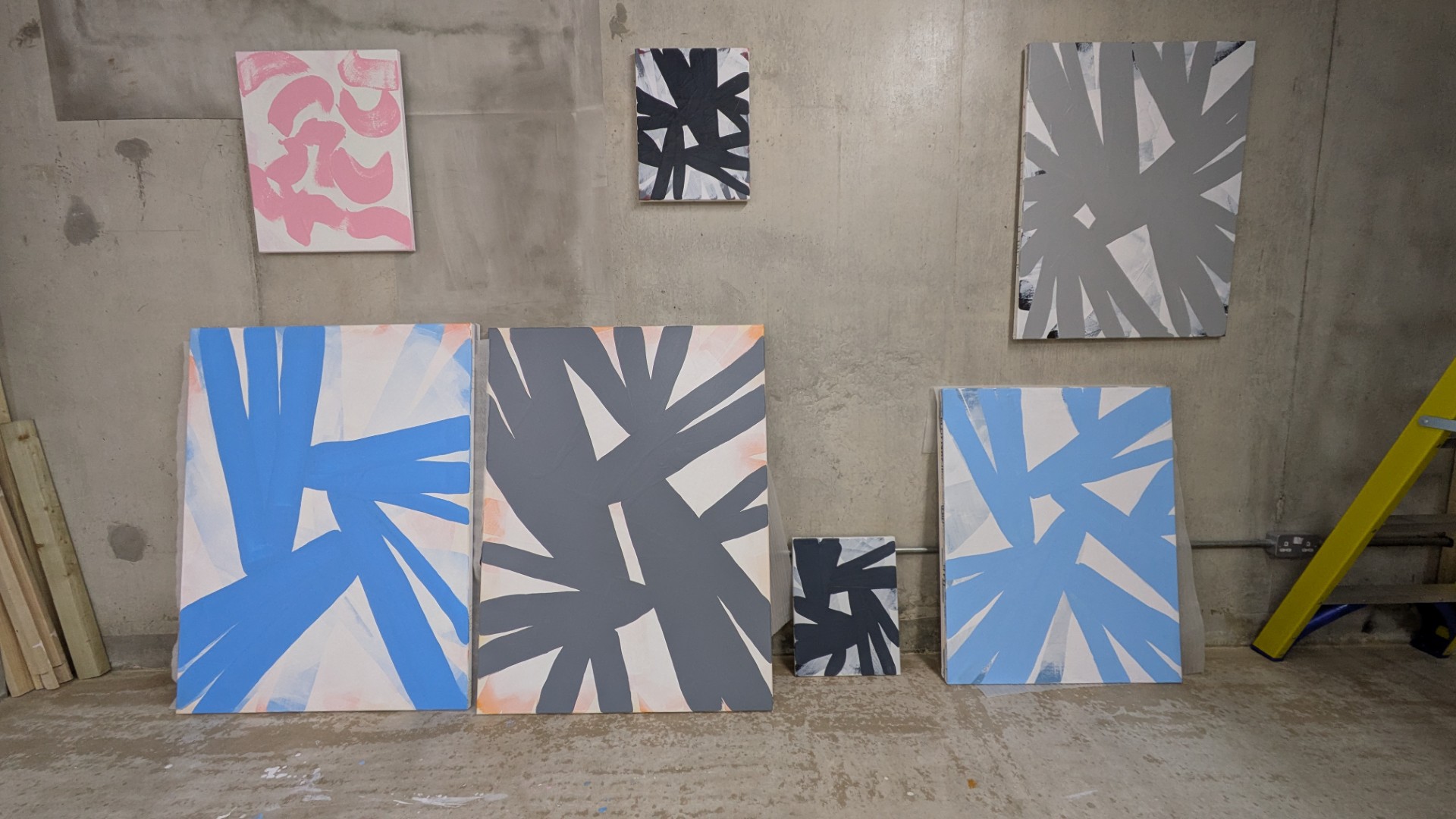
A lot of my current work still relates to ideas of algorithms. We usually think of algorithms in relation to computing, but for me they’re really about processes, rules and structures that generate outcomes.
The paintings work in a similar way. They’re built around simple systems, forms and gestures, but they’re much more driven by impulse than computer-generated work. Paint has a life of its own. You’re never completely in control of it – you’re guiding it rather than directing it.
The works also create imaginary spaces. There’s a sense of depth, foreground and background, almost like fantastical environments. At the same time there’s something humorous and simple about them. They’re using exaggerated brushstrokes and there’s a slightly cartoon-like quality that I enjoy.
CLT: Thank you for sharing your work and thoughts with us.